
Trying to soothe a crying baby can be a stressful experience for both parents and children, especially when they’re too young to tell you what’s wrong. Thankfully over time we’ve learned that safe, effective methods like swaddling, rocking, and pacifier use can help calm babies down. But although they were designed to calm fussy infants in the moment, these techniques won’t work forever. Eventually, babies outgrow swaddling and need more intervention than simple rocking, and if used for too long, pacifiers in particular can be damaging to their developing smiles. Here’s what you need to know about proper use for these time-tested comfort items, and when it’s a good idea to wean your child off them for good.
How Do Pacifiers Help Babies?
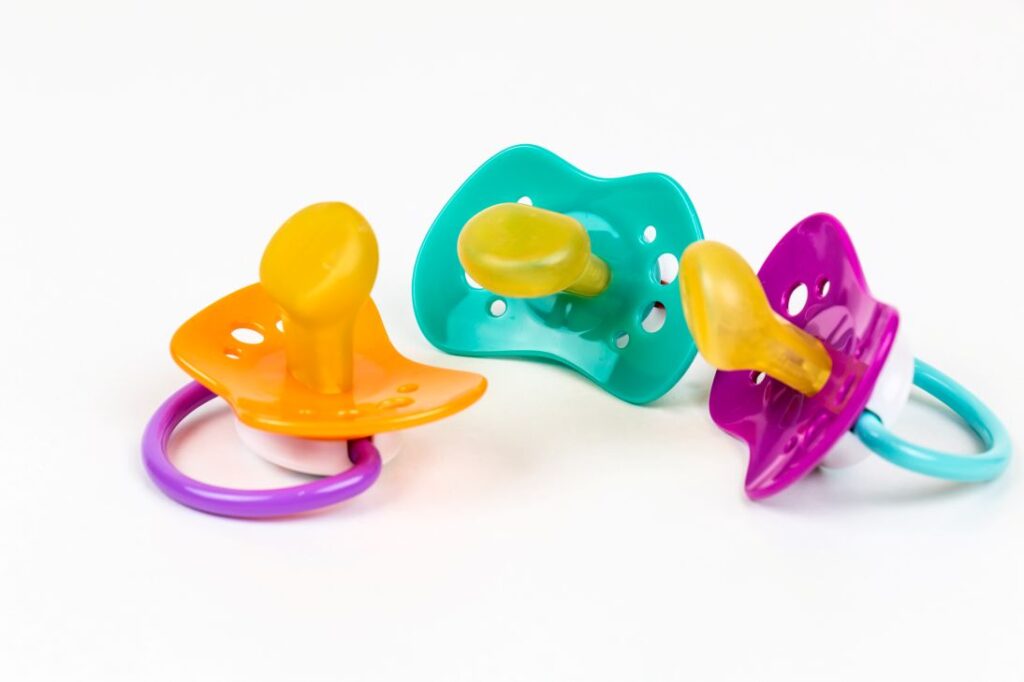
Pacifiers can be extremely helpful to both babies and their parents, especially for soothing infants in their first few months. They can also help ease pain in nursing children and even reduce their risk of sudden infant death syndrome (SIDS). They are often used to assist premature infants in the ICU and have been proven to shorten hospital stays and help tube fed babies learn to adapt to feeding from a bottle.
How Pacifiers Can Harm Oral Health
Although they do have many important benefits for very young infants, as your baby grows, pacifiers and even thumb sucking can become increasingly dangerous to their oral health. They can not only interfere with the proper growth of the mouth, but also the alignment of their developing teeth. They may even cause changes in the roof of the mouth (palate) and are especially risky for children over the age of two.
Because of the pressure created by sucking, pacifiers may also increase the probability of your child developing ear infections and may even make breastfeeding difficult in infants who do not know how to properly latch yet, so it is recommended that they only be provided if your baby is already nursing well.
How To Use Pacifiers Safely
The severity of dental damage a pacifier may cause depends on how intensely your baby sucks on them. Infants who are more passive are less likely to develop issues with their baby teeth, so if you notice your child is getting a bit too intense, it may be time to distract them with something else.
It is also important to provide them with pacifiers that do not have removable parts or that are fluid filled, clean them regularly, and never dip them in anything flavored or sweet to encourage use.
How to Help Your Baby Quit Using a Pacifier
Although most children will give up their pacifier on their own between the ages of two and four, if you are concerned about their oral development or reliance on these devices, you may want to encourage them to stop sooner. This is where you might need to involve your child’s pediatric dentist. In some cases, they may recommend a mouth appliance to help break your little one’s dependence.
Either way, be prepared to offer plenty of praise and encouragement to your baby as they transition away from their pacifier. Never scold or punish a child who ‘slips up’ or has a setback, and with a little time and patience, they’ll soon learn to comfort themselves with other methods, and make room for their gorgeous, growing grin!
Remember, pacifiers are an excellent tool for babies who need soothing, providing soothing comfort to both them and their parents. However, it’s important to use them in moderation, and keep a close eye on your child’s smile to ensure their pacifier does not interfere with their oral development.
About Our Practice
At All About Kids Dentistry, our team is here to help your child’s teeth from infanthood to adulthood. If your baby is reliant on a pacifier to calm down, there’s no need to be concerned. However, it is still important to keep a close eye on their oral development. To get started monitoring the health of their teeth and gums, schedule a checkup for your baby today. The ADA recommends they begin seeing a pediatric dentist around one year or when their first tooth erupts, but we’re always here to help with questions or concerns at any time. To book your child’s appointment, visit our website or call 847-870-0475.